
The Message Is Encrypted. The Backup Might Not Be
End-to-end encryption protects a message in transit. Yet if the conversation history is stored in an unsecured cloud backup, the protection chain may be broken.
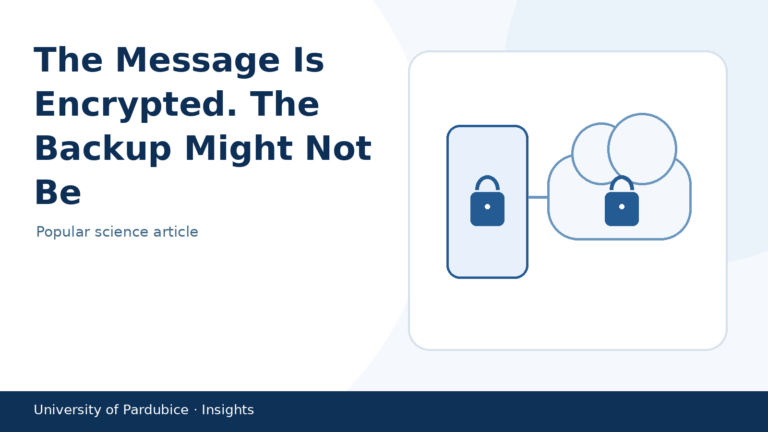
End-to-end encryption protects a message in transit. Yet if the conversation history is stored in an unsecured cloud backup, the protection chain may be broken.

Users often act insecurely not because they lack knowledge, but because security competes with time, convenience and an immediate goal. Secure systems must support safer choices.
Crisis maps cannot be evaluated like ordinary web applications. During floods, evacuations or emergency response, time pressure and rapid spatial understanding are decisive.
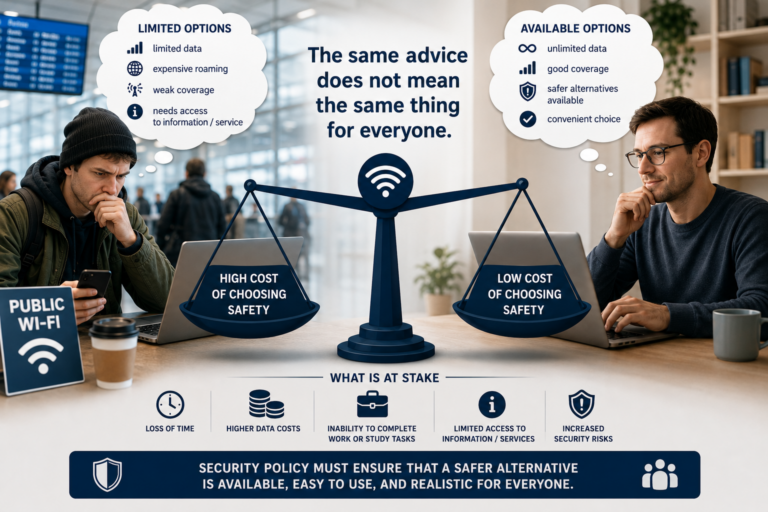
Security advice often assumes that everyone has a safer alternative. In reality, limited mobile data, roaming costs and poor coverage reshape the decision.

Adaptive security must respond to user behaviour, device condition and context. The challenge is combining these signals without producing opaque decisions.
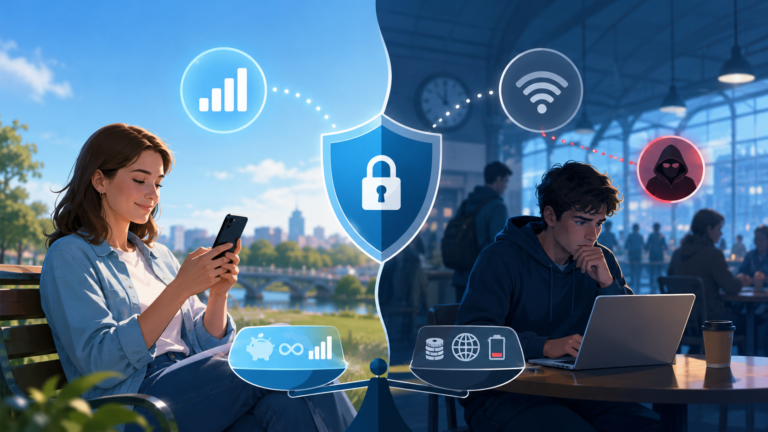
Adapting communication can help. But once AI infers psychological profiles from text and behaviour, questions of consent, proportionality and control arise.
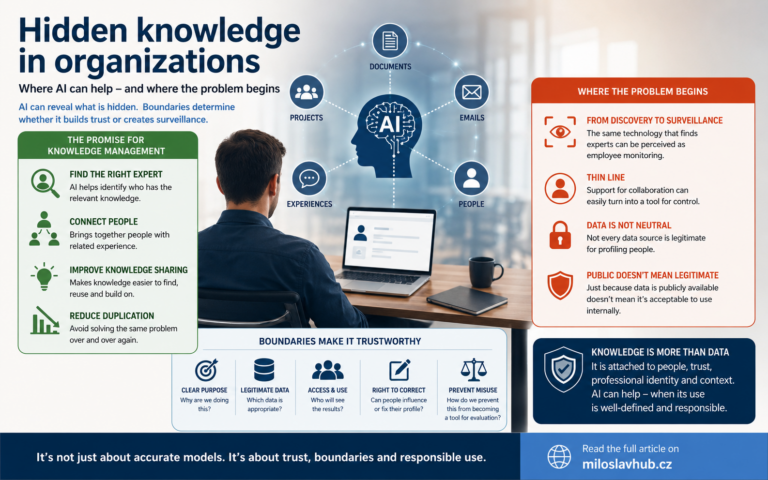
Organisations often possess knowledge that remains difficult to see. AI can help uncover it, but only when its data sources and intended uses are clearly defined.

Public Wi-Fi risks are not simply a matter of ignorance. Many people understand the danger but still prioritise convenience, speed or habit.
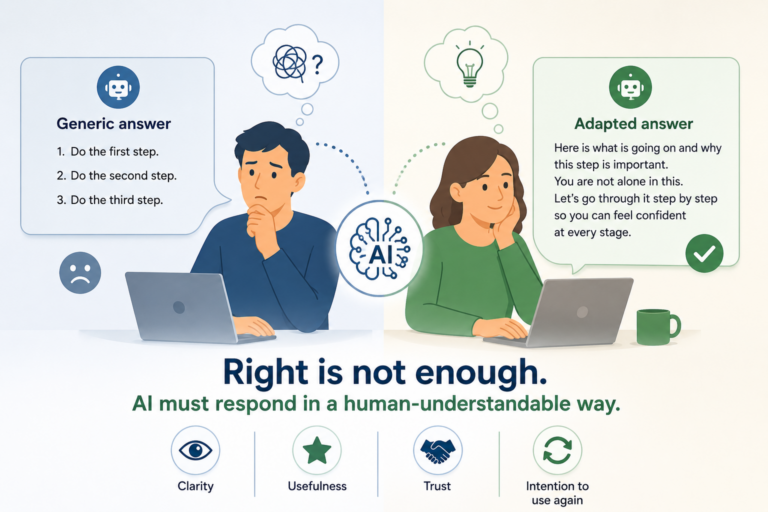
In digital support, accuracy is only part of the answer. A response must also be clear, appropriate and suited to the communication needs of the user.
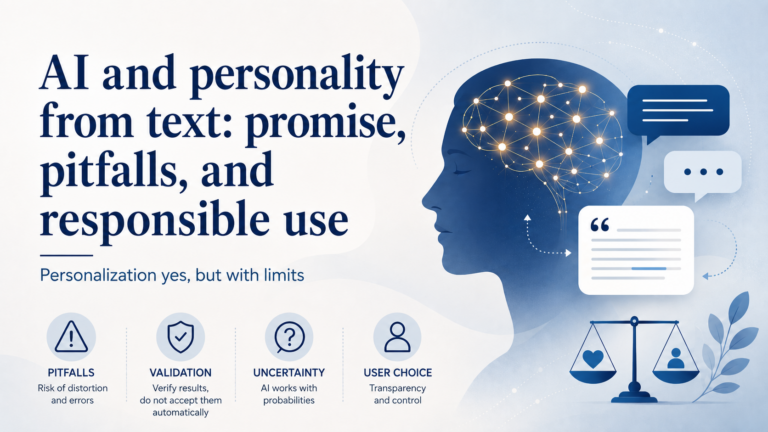
Models that infer personality style from text can seem convincing. But good scores are not enough: leakage, calibration and the real value of adaptation all matter.