The Message Is Encrypted. The Backup Might Not Be
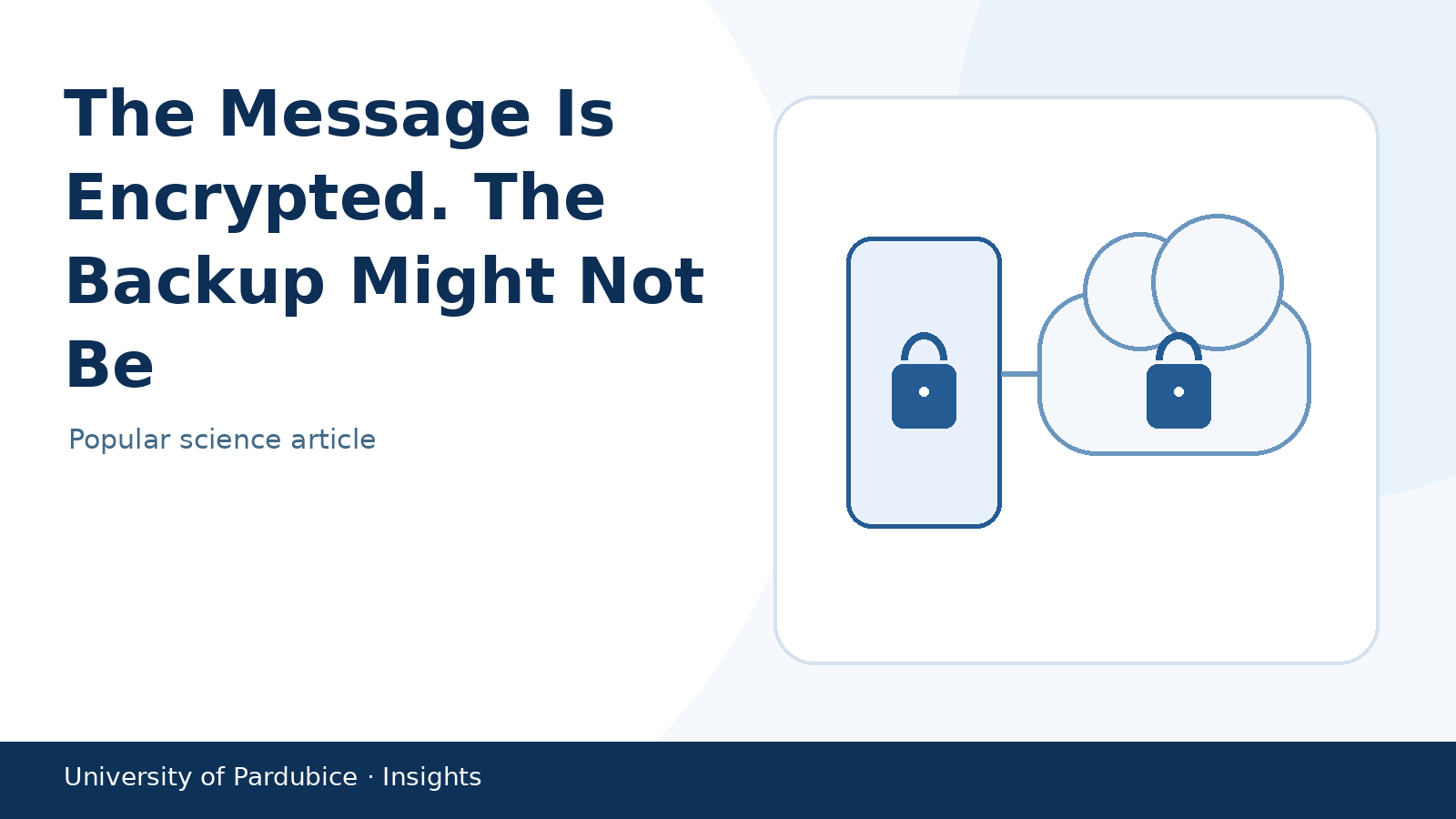
End-to-end encryption protects a message in transit. Yet if the conversation history is stored in an unsecured cloud backup, the protection chain may be broken.
Encrypted communication is not the same as an encrypted backup
Modern messaging applications often emphasise end-to-end encryption. This means that only the participants can read the message content while it is being transmitted. To an ordinary user, this may sound like complete protection.
Security does not end when the message is delivered. Conversation history may later be stored automatically in the cloud. If the backup does not use comparable protection, a weak point appears outside the communication channel itself.
Why users may not notice
Backup often runs automatically in the background. Users may therefore reasonably assume that the same security applies to both the message and its stored copy.
Application interfaces also tend to separate communication settings from backup settings. Information about encryption may be technically available but practically hidden.
The convenience paradox
Automatic backup is useful when a phone is lost or replaced. Yet this convenience can also discourage users from checking how the backup is protected.
This is not merely a user error. It is also a design issue when an important security decision is moved outside the user’s attention.
What applications should do better
Applications should explain clearly the difference between message encryption and backup encryption. The warning should appear when backup is configured, not in a long manual that most people will never read.
The secure option should be easy to find, clearly named and, where possible, enabled by default.
Practical takeaway
The Message Is Encrypted. The Backup Might Not Be
Protecting a message in transit is not enough. Security must cover the whole data lifecycle, including copies and backups.